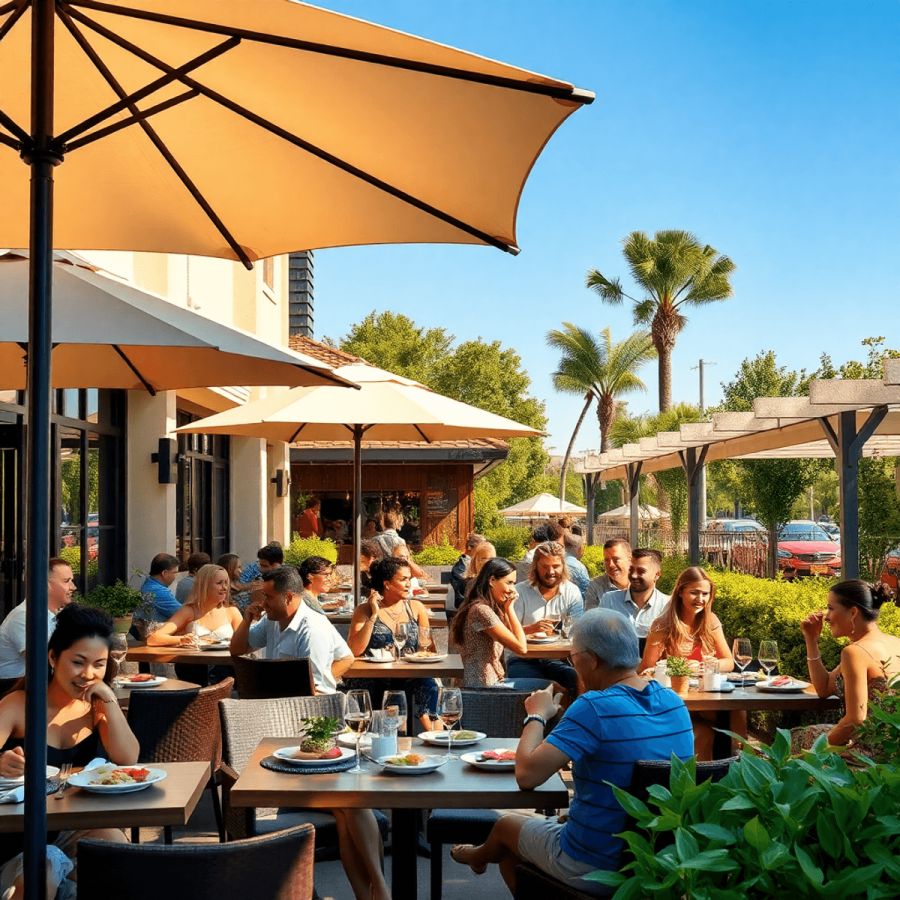
If you run any kind of customer-facing business, you already know this: outdoor space is either a goldmine, or it is just… unused square metres you still pay for.
And shade is usually the thing that decides it.
No shade means people squinting at menus, customers drifting back inside, staff getting roasted mid-shift and that slightly sad sight of empty tables even though the weather is technically “nice”. Too much cover (or the wrong kind) and the area feels dark, boxed in, like an afterthought.
So, pergola vs veranda. Two words people throw around like they mean the same thing. They do not. They can overlap, sure, but for business use they behave very differently.
Let’s break it down in a practical way, without the fluffy “create an oasis” stuff.
First, what are we actually talking about?
Pergola (in plain terms)
A pergola is an open-sided structure with posts and a roof framework that can be:
- Open slatted (classic look, some sun still comes through)
- Covered with fabric or a retractable canopy
- Fitted with louvres (manual or motorised)
- Upgraded with sides like screens, glass panels or shutters if you want
Pergolas are often freestanding or attached to a building. For businesses, they are usually used to “create” an outdoor room where there wasn’t one before.
Veranda (in plain terms)
A veranda is a roofed structure attached to a building, typically with a solid roof, often extending over a patio, walkway or seating area. It can be open at the sides, partially enclosed or fully enclosed with glazing.
Verandas feel more like an extension of the building. Pergolas feel more like a destination area you build outside it.
That difference matters a lot when you are thinking about branding, planning, footfall flow and yes, British weather.
The core question: what do you need the shade to do?
Most business owners start with “we need shade”. But the better question is what kind of protection you need, and what the outdoor area is supposed to achieve.
Here are the big “jobs” outdoor cover can do:
- Keep customers comfortable (sun, glare, heat, rain, wind)
- Extend trading hours and seasons (breakfast in spring, evenings in autumn)
- Increase capacity (more tables, more covers, more bookings)
- Create a premium area (VIP seating, private hire, events, tastings)
- Protect assets (furniture, flooring, heaters, POS equipment, plants)
- Look good in photos (social content, signage, kerb appeal)
Pergolas and verandas can do all of these. But they do them differently, and with different compromises.
Weather realism: UK conditions change the answer
If you were in a dry, consistent climate, a basic pergola would solve most shade needs. But in the UK, the issue is rarely “too much sun” for long. It is more like:
- sudden showers
- sideways rain
- wind funnels between buildings
- bright low sun that blinds people at 4pm
- damp evenings even in summer
- and that weird moment where it is warm in the sun and freezing in the shade
So the structure that wins is usually the one that lets you adapt quickly.
This is where modern pergolas (with louvres and integrated drainage) can compete with verandas, because they are not the same airy garden pergolas people picture from DIY shops.
Still, verandas tend to be more “set and forget” for rain cover.
Pergolas for business: where they shine
1) Flexible layouts, better for “creating” space
If you have a courtyard, beer garden, rooftop, car park edge
Outdoor seating is one of those things that looks simple on paper.
Put out a few tables. Add some chairs. Maybe a plant or two. Job done.
Then reality shows up. Wind. Drizzle that somehow goes sideways. Sun that hits one table like a spotlight while the rest of the terrace sits in shade. A sudden temperature drop at 7pm that makes everyone ask for the bill at the same time.
And that is where awnings quietly change everything. Not in a flashy, trendy way. More in a practical, money on the books, customers actually stay longer kind of way.
Because when your outdoor area becomes reliably usable, you stop treating it like a bonus and start treating it like part of the restaurant.
Outdoor seating is only valuable when it’s predictable
This is the bit people skip.
An extra ten covers outside sounds great, but only if you can count on them. If your patio is empty every time the weather wobbles, or if staff are constantly moving guests around to dodge glare and light rain, it turns into a headache instead of an asset.
Awnings bring control back. Not total control, this is still the UK and the sky will always do what it wants. But enough control that you can seat people with confidence and keep them comfortable for more than fifteen minutes.
And comfort is basically the whole game. People don’t linger when they’re squinting, shivering or feeling like their food might get rained on at any moment.
You extend the season without pretending it’s the Med
Restaurants often talk about “extending the season” like you need full-on winter domes and heated igloos. Sometimes you do. But a good awning can take you surprisingly far on its own.
Spring becomes usable earlier because you can cut the chill from wind and keep tables dry after light showers. Autumn stays open longer because you can cover guests while you add simple extras like outdoor heaters and blankets.
It’s not about turning November into July. It’s about turning borderline days into bookable days for your outdoor restaurant. Those “might risk it” customers. The ones who want to sit outside but only if it feels safe. An awning nudges them over the line.
Rain cover that doesn’t feel like a sad compromise
Let’s be honest, some outdoor setups look like a last-minute scramble. A few parasols doing their best. A plastic gazebo that screams “temporary”.
A properly chosen awning looks intentional. Like the outdoor area was designed, not improvised.
It also performs better. Parasols are fine for sun, but in wind and rain they become annoying. Water runs off in weird places. Guests end up with a drip on one shoulder. Staff are constantly adjusting things. You probably know the drill.
Awnings create a continuous covered zone. You can position tables properly, plan service routes and keep walkways clearer. Guests feel looked after. Which sounds fluffy, but it directly affects reviews and repeat visits.
Shade changes the mood more than you’d think
The sun is great. Direct sunlight in someone’s eyes for an entire lunch booking is not.
Restaurant awnings give you shade that feels calm, not harsh. The difference is noticeable straight away. People stop squinting. They can read menus without angling them like mirrors. Drinks stay colder. Food doesn’t get that “left under a heat lamp” vibe.
And the mood changes too. Outdoor dining becomes relaxed. Like a little escape. That is what people want when they choose to sit outside in the first place.
If your restaurant gets strong afternoon sun, or if your frontage faces the wrong direction (so half the terrace is always roasting), an awning is one of the quickest ways to fix that without redesigning the entire space.
You create a “room” outside, not just a row of tables
This is the part that feels more like design than weatherproofing.
Awnings define a space. They give your terrace edges. A ceiling, basically. Suddenly the outdoor seating doesn’t feel exposed, like it’s just sitting on the pavement. It feels like an extension of the restaurant.
That matters for atmosphere. People are drawn to spaces that feel considered. Awnings help with that in a way that signage alone can’t.
It also makes passers-by more likely to notice your outdoor area as somewhere they could actually sit comfortably. That small psychological cue. Covered seating reads as safer, cosier and more premium.
But it’s not just about awnings; restaurant blinds, restaurant curtains and restaurant pergolas can also play significant roles in creating that inviting outdoor space.
Better use of space, and often more covers
When you have reliable cover, you can plan the layout properly.
You stop leaving awkward gaps “just in case we need to move tables” when the rain starts. You stop clustering everything close to the building because that’s the only protected bit. You can spread out, align tables and create service lanes that don’t involve staff squeezing past handbags and chair backs.
In many cases, restaurants end up fitting more covers outside once the area is structured around an awning. Not always, and you still need to keep it comfortable, but the space becomes workable.
And workable space is what turns a terrace from occasional seating into daily revenue.
Your staff will thank you, quietly
Guests feel the difference. Staff feel it even more.
If you’ve ever had a shift where the weather changes every half hour, you know how chaotic it gets. Moving plates. Re-seating tables. Apologising. Getting asked if you have umbrellas. Running outside to wipe down chairs again. Watching a server carry a tray while trying not to step in puddles.
Awnings reduce that chaos. Not completely, but enough that service becomes smoother. And smoother service usually means higher spend, better tips, fewer mistakes and less stress.
Also, a covered outdoor area makes it easier to keep things clean and presentable. Less debris on tables. Less damp on cushions. Less time “resetting” the terrace.
Branding, but the useful kind
Awnings are one of the rare exterior upgrades that do two jobs at once.
They improve function, yes. But they also improve the look of the place from the street. A well-fitted awning with colours that match your brand can make your restaurant more recognisable. More finished. More like somewhere people should try.
If you’re on a high street with lots of competition, this matters. People often choose where to eat based on what feels inviting in the moment. A nice covered seating area signals hospitality before anyone even reads your menu.
And if you add subtle lighting underneath, it becomes even stronger in the evenings. Warm glow, sheltered tables, a little buzz. It sells itself.
Customers stay longer, and longer usually means more spend
There’s a simple chain reaction here.
Comfort leads to staying longer. Staying longer leads to another drink, maybe dessert, maybe coffee. It also leads to better conversations, better vibes and better reviews because people remember the experience as easy and enjoyable.
Outdoor areas can be brilliant for this because they naturally feel less rushed than indoor tables. But only if guests aren’t fighting the elements.
This is where awnings come into play. They create the conditions for that slower, more enjoyable dining pace. And from a business point of view, you’re not just increasing covers. You’re increasing average spend.
It can protect furniture and reduce wear
Outdoor furniture takes a beating. Sun fades fabrics. Rain seeps into cushions. Wooden tables swell and crack. Metal can rust. Even if you cover things overnight, constant exposure adds up.
An awning won’t eliminate wear, but it can reduce it massively. Less direct rain on seating, less harsh sun on finishes, less constant dampness.
Over time that means fewer replacements, fewer repairs and less of that slightly tired look that outdoor areas can get after a season or two.
It also makes it easier to invest in nicer furniture in the first place, because you’re not leaving it completely at the mercy of the weather.
Choosing the right awning (so it actually helps)
Not all awnings are equal, and picking the wrong one is how people end up thinking awnings “don’t really work”.
A few practical things to consider when selecting commercial awnings or electric awnings:
Fixed vs Retractable Awnings
A fixed awning gives constant cover and feels very permanent. It’s great if you want the outdoor area always defined and protected. However, a retractable awning offers flexibility. On days when you want full sun or need to manage wind, being able to pull it in and out is genuinely useful.
Some restaurants opt for retractable awnings purely for the vibe. Blue sky days feel open and airy, while the awning provides shelter when the sun or drizzle kicks in.
Wind Matters, Especially in Exposed Spots
If your restaurant frontage experiences strong gusts, it’s crucial to consider wind rating and proper installation. This isn’t the place to cut corners. A good supplier should discuss with you about wind sensors (for motorised systems), anchoring and whether side screens are worth adding. If they don’t, that’s a red flag.
Think About Drainage and Runoff
Where does the water go when it rains? Sounds boring, but it’s critical. You don’t want a steady drip line landing right on the edge tables or water pouring onto the pavement where customers step out. The best setups manage runoff cleanly, either through design or positioning.
Lighting and Heaters Can Integrate Nicely
If you already use outdoor heaters, an awning can help trap a little warmth making them feel more effective. Additionally, integrated lighting under the awning can transform the space into an evening destination, not just a daytime overflow. Even simple warm white lighting changes the whole feel of a terrace.
For restaurants looking to enhance their outdoor areas with such features, considering professional services for design and installation of restaurant canopies can prove beneficial.
Permissions and Frontage Rules
Depending on your local council, lease terms, listed building status or landlord restrictions, you may need permission. Especially if you’re altering the exterior appearance or extending over a public footpath.
It’s worth checking early so you don’t fall in love with a design that becomes a paperwork nightmare later.
Awnings Can Change How You Market the Restaurant Too
Once you have a covered, good-looking outdoor space, such as those provided by restaurant verandas, you can actually use it in your marketing without crossing your fingers about the weather.
You can photograph it. Put it on Google Business. Use it on your website. Post it on Instagram. Promote brunch outside, even when it’s not peak summer. Mention “covered outdoor seating” on your booking pages.
That phrase alone reassures people. Especially in the UK. People want the option of outdoors without the risk of being cold and wet the whole time.
And when customers start specifically asking for those outside tables, you know you’ve done something right.
The Real Transformation is Confidence
That’s the word that keeps coming up.
Confidence to seat guests outside without worrying. Confidence to take bookings rather than hoping for walk-ins. Confidence that your terrace won’t suddenly become unusable halfway through service.
Awnings do not just make outdoor seating nicer. They make it dependable. Which changes staffing, planning, revenue and how the restaurant feels from the street.
If your outdoor space currently feels like a gamble, an awning is one of the most straightforward upgrades you can make. Not the cheapest, no. But one of the clearest returns.
And once it’s up, and you have that first busy lunch where the weather does its usual thing and nobody cares because everyone is dry and comfortable, thanks to outdoor living projects like these, you’ll wonder why you waited.
For those looking to enhance their outdoor space further, commercial outdoor living solutions are also available to create an inviting atmosphere for guests.
FAQs (Frequently Asked Questions)
Why is outdoor seating only valuable when it’s predictable?
Outdoor seating adds value to a restaurant only when it can be reliably used. If the patio is empty during unpredictable weather or guests constantly need relocating due to sun glare or rain, it becomes more of a hassle than an asset. Awnings provide enough control over the environment to seat guests confidently and keep them comfortable, encouraging them to stay longer.
How do awnings help extend the outdoor dining season?
Awnings allow restaurants to make borderline days bookable by cutting chill from wind, keeping tables dry after light showers and providing cover for guests in autumn. Combined with extras like outdoor heaters and blankets, awnings help extend the outdoor dining season without pretending to turn colder months into summer.
What advantages do awnings have over parasols or temporary covers?
Unlike parasols or plastic gazebos that often look improvised and perform poorly in wind and rain, properly chosen awnings create a continuous covered zone. This allows for better table positioning, clearer service routes and improved guest comfort, which positively impacts reviews and repeat visits.
How do restaurant awnings improve guest comfort regarding sunlight?
Awnings provide calm, consistent shade that prevents guests from squinting or struggling with menus angled like mirrors. This keeps drinks colder, food fresher and creates a relaxed outdoor dining atmosphere – a little escape that guests desire when choosing to sit outside.
In what way do awnings contribute to the design and atmosphere of outdoor seating areas?
Awnings define the outdoor space by giving terraces edges and a ceiling-like cover. This transforms outdoor seating from feeling exposed on a pavement to being an inviting extension of the restaurant, making it feel safer, cosier and more premium – qualities that attract both guests and passers-by.
Can installing awnings lead to better use of outdoor space and more covers?
Yes. Reliable cover from awnings allows restaurants to plan layouts properly without leaving awkward gaps or clustering tables near the building. This structured approach can enable spreading out tables comfortably with clear service lanes, often resulting in fitting more covers outside while maintaining guest comfort.
or a wide patio away from the building, pergolas are often the easiest way to turn it into a defined zone.
Because they can be freestanding, you can:
- build a seating island away from doors and service routes
- create multiple covered pods (useful for group bookings)
- define queue areas for takeaways or ticketing
- form an event space that feels intentional
A veranda, because it is attached to the building, tends to cover the area immediately next to the façade. That is great for some venues, but limiting for others.
2) Strong visual branding
Pergolas can look very “designed”. Clean lines, modern frames, lighting in the beams, signage, plants trained up the posts, colour matched powder coating. For hospitality, that can push the outdoor space from functional to Instagrammable.
And yes, that matters. People book places that look like somewhere they want to be.
A good pergola can become a signature feature. The thing people describe. “The one with the covered terrace and fairy lights.” That kind of thing.
3) Ventilation and comfort in warm spells
A veranda with a solid roof can trap heat, especially if it is shallow and enclosed at the sides. Pergolas, even with louvres, can breathe better. On hot days, that makes a difference, particularly for kitchens nearby, south facing seating or city centre spaces where heat builds up.
If your business gets crowded, ventilation is not just comfort. It is atmosphere. Nobody wants to sit in a stuffy outdoor room that feels like a bus shelter with heaters blasting.
Specific Uses of Pergolas in Different Businesses
Café Pergolas
For cafés looking to enhance their outdoor seating area while providing shelter from elements, cafe pergolas are an excellent choice.
Restaurant Pergolas
Restaurants can benefit greatly from restaurant pergolas which allow for an al fresco dining experience while maintaining a stylish ambiance.
Shop Pergolas
Retail businesses can also utilise shop pergolas to create inviting entrance areas or outdoor display spaces that attract customers.
4) Better “all-in-one” upgrades if you go premium
Modern commercial pergola systems, often part of outdoor living projects, come ready for:
- motorised louvres (open, close, tilt for glare)
- integrated gutters and drainage
- LED lighting
- infrared heaters
- drop-down screens
- glass sliding doors
- sound systems (sometimes)
So if your goal is to run that outdoor area like an outdoor dining room, pergolas can be built as a modular system that grows with you.
The obvious catch is cost. A basic pergola is cheaper; a proper commercial louvred pergola from Corona Contracts is not cheap. But it can turn into a year-round revenue area, which changes the maths.
5) Great for hospitality, gyms, wellness and event spaces
Pergolas tend to suit businesses that want a vibe, a destination feel:
- cafés and restaurants adding covered dining
- pubs building a smarter terrace area
- hotels creating outdoor lounge seating
- spas and wellness studios with sheltered relaxation zones
- gyms running outdoor classes without getting rained off
- wedding venues wanting flexible ceremony cover
If you need to move furniture around for events, pergolas often adapt better.
Verandas for business: where they win
1) Reliable rain protection, especially with solid roofs
This is the big one. A veranda is basically a roof extension. That means:
- predictable cover in heavy rain
- less reliance on moving parts
- better protection for the area directly outside doors
If your customers step out with drinks, or staff carry trays in and out, having that immediate cover matters. It reduces slips. It reduces stress. It reduces those awkward “wait, is it raining inside the covered area?” moments.
Verandas are also an excellent part of outdoor living solutions whether for domestic or commercial purposes.
2) A natural extension of your building
Some businesses need the outdoor area to feel like a continuation of indoors. Verandas do that well.
Think:
- garden centres with covered walkways
- care homes with sheltered seating right outside communal rooms
- schools and nurseries needing covered play areas connected to classrooms
- retail shops wanting a sheltered display frontage
- office buildings with covered break areas directly off the canteen
A veranda can also make the façade look more substantial, more permanent. For certain brands, that stability is the whole point.
3) Better for entrances, walkways and circulation
Pergolas are great for seating zones, but verandas win when the main job is controlling movement and keeping people dry as they enter, queue, or wait.
If you have:
- an entrance that gets congested
- deliveries and pickups at the door
- guests waiting for a table
- a reception or ticket booth
A veranda can cover that threshold space properly.
4) Often simpler for permissions and integration (but not always)
Because verandas are attached and read as an “extension”, they may align better with how some property owners, landlords and planning teams think about buildings. Especially if you are in a retail park, a managed high street site or a leased unit with strict frontage rules.
That said, planning is local and specific. Sometimes pergolas are easier because they can be classed differently; sometimes verandas like those used in restaurants are easier because they are attached and “tidy”. You have to check. No shortcut here.
5) Good for long, shallow spaces
If your outdoor area is basically a strip running along the building, a veranda is often the cleanest solution. A pergola can work, but verandas naturally fit that geometry.
You see this all the time with:
- restaurants on a pavement frontage
- pubs with narrow terraces
- cafés on corner units
- seaside premises where wind direction matters
The money question: what delivers ROI faster?
This depends on your business type, but here is a grounded way to think about it.
Pergola ROI tends to be strongest when:
- it creates new usable capacity in a previously awkward space
- you can run it in shoulder seasons with screens, heaters, lighting
- you can charge a premium for the covered area (better tables, bookings, private hire)
- you host events (birthdays, corporate, tastings, classes)
Basically, pergolas are often a revenue generator, not just a shelter.
Veranda ROI tends to be strongest when:
- it protects high traffic areas that already matter (entrance, walkway, immediate terrace)
- it reduces disruption from rain (fewer walkouts, fewer abandoned tables)
- it improves accessibility and safety (less slippery thresholds)
- it improves kerb appeal without changing the whole layout
Verandas are often a risk reducer and consistency booster.
Customer experience: what it feels like to sit under each
This is slightly subjective, but customers notice.
Pergola experience
- Feels open and “outdoorsy”, even when covered
- Can feel premium and modern if done well
- Can feel cold and exposed if sides are too open in wind
- Can feel magical at night with lighting and planting
A pergola is usually better when you want people to feel like they are outside, not just under a roof.
Veranda experience
- Feels sheltered and secure, like a porch
- Can feel darker if the roof is solid and the space is deep
- Can feel like an indoor extension if you glaze the sides
- Often quieter in rain (depending on roof material)
A veranda, such as those offered by Corona Contracts, is better when comfort and protection matter more than the “open air” vibe.
Maintenance and operations: what your staff will deal with
This part is boring until it becomes your problem every day.
Pergolas
- Moving parts (if louvred or retractable) mean occasional servicing, typical of retractable pergolas
- Needs cleaning in roof channels and drainage points
- Integrated lighting and heaters add electrical considerations
- If you add screens or glazing, you add cleaning time
But pergolas can also be built as simple fixed structures. The maintenance depends on the spec.
Verandas
- Typically fewer moving parts
- Roof cleaning still matters (moss, debris)
- Gutters and runoff have to be managed
- If enclosed with glass, you are cleaning glass. Constantly.
Operationally, verandas are often simpler. But if your veranda becomes a semi indoor room, you may need to think about heating strategy, ventilation and condensation.
Planning, licensing and the annoying bits
Not legal advice. Just real world friction points people hit.
For many businesses, outdoor structures connect to:
- planning permission
- building regulations (depending on size, attachment, electrics, fire considerations)
- licensing for outdoor alcohol consumption
- noise considerations for neighbours
- landlord approvals if you lease
In practice:
- Verandas can be seen as more permanent, which can trigger stricter scrutiny in some areas.
- Pergolas can sometimes be framed as more lightweight, but if they are substantial and enclosed, they are not “temporary” in anyone’s eyes.
If you are spending real money, talk to your installer and local authority early. Also, check your lease. Landlords can be surprisingly specific about what you can bolt to the building.
Quick scenarios: which is better for which business?
Not perfect, but useful.
Restaurants and cafés
- If you want a premium dining terrace with lighting, heaters, screens: pergola
- If you mainly need to keep tables dry right outside the doors: veranda
- If you have a big garden area away from the building: pergola
- For more insights on outdoor living solutions in the restaurant and café sector, check out this link.
Pubs and bars
- For creating bookable pods, sports viewing areas, event corners: pergola
- For covering the immediate patio where people stand with drinks: veranda
- If wind is a big issue, lean towards a system that can take screens or glazing, whichever you choose.
Hotels and wedding venues
- For flexible ceremony cover and photo friendly zones: pergola
- For sheltered entrances and walkways between buildings: veranda
- Many venues end up with both, honestly.
Retail (garden centres, farm shops, forecourts)
- For covered walkways and product protection: veranda
- For outdoor browsing zones and café overflow: pergola can work, but veranda is usually the backbone.
- Explore more about outdoor living solutions for retail spaces here.
Gyms, studios, wellness
- For outdoor classes and calm lounge areas: pergola
- For sheltered transitions and entrances: veranda
Offices and commercial workplaces
- For a simple sheltered break area against the building: veranda
- For creating a separate outdoor social zone away from entrances: pergola
The decision checklist (use this, it saves time)
Answer these quickly, like you are forced to choose.
- Do you need the cover attached to the building?
If yes, you are probably in veranda territory. - Is heavy rain protection the top priority?
If yes, veranda or a high spec pergola with proper drainage and a proven roof system. - Is your goal to create a destination space away from the building?
Pergola. - Do you want to operate the area in colder months?
Either can do it, but you will need sides (screens or glazing) and heating. Pergolas often package this nicely as a system. - Is your outdoor space long and narrow along the façade?
Veranda fits naturally. - Do you want a statement feature that looks designed?
Pergola, most of the time. - Are you working within strict frontage rules from a landlord or retail park?
Often veranda, but check the rulebook first. - What is more valuable for you: extra seats or smoother flow at entrances?
Extra seats: pergola. Flow and shelter: veranda.
A slightly overlooked option: combine them
This is common on larger sites. You typically use a veranda to protect:
- the doorway zone
- the immediate terrace
- the queue or waiting area
Then a pergola to create:
- a larger seating zone further out
- a private hire area
- a second “room” with its own lighting and vibe
If you have the footprint, this combination often feels the most natural for customers too. A sheltered transition, then an outdoor destination.
What I would do if I were choosing for my own business
I would start with the revenue goal, not the structure.
If I needed to add capacity and create a space people book on purpose, I would lean towards a pergola and I would spec it properly so it is not useless in rain or wind.
If I needed to stop losing trade every time the weather turns, and I wanted the simplest reliable cover right outside the building, I would go for a veranda.
And I would not pretend the UK climate is forgiving. It is not. If the structure cannot handle a wet, windy Thursday in October, it is basically seasonal furniture.
Bottom line
- Choose a pergola if you want flexibility, a designed look and a destination style outdoor area that can be upgraded into a proper year-round trading space.
- Choose a veranda if you want dependable shelter attached to the building, especially for entrances, walkways and the immediate terrace where weather disruption hits hardest.
Either can work brilliantly. Either can also become a pricey mistake if it does not match how your customers move, sit and spend money.
Start with that. Then pick the shade.
FAQs (Frequently Asked Questions)
What is the main difference between a pergola and a veranda for business use?
A pergola is an open-sided structure with posts and a roof framework that can be freestanding or attached, often used to create an outdoor room away from the building. A veranda is a roofed structure attached directly to a building, typically with a solid roof, acting as an extension of the indoor space. This distinction affects branding, layout and how each handles weather conditions.
How do pergolas and verandas help businesses extend trading hours and seasons?
Both pergolas and verandas provide shelter that can protect customers from sun, rain, wind and cold, allowing businesses to operate comfortably during early spring breakfasts or autumn evenings. Pergolas often offer flexible layouts with adjustable features like louvres for ventilation, while verandas provide more permanent solid cover ideal for consistent weather protection.
Why might a business choose a pergola over a veranda for their outdoor space?
Businesses may prefer pergolas when they want to create defined outdoor zones away from the building, such as seating islands or event spaces. Pergolas offer flexibility in layout, strong visual branding opportunities with modern designs and lighting, and better ventilation during warm spells compared to verandas which are fixed to the building façade.
What are the advantages of modern pergolas in UK weather conditions?
Modern pergolas equipped with motorised louvres and integrated drainage systems adapt quickly to sudden showers, sideways rain, wind funnels and changing sun angles common in the UK. They balance airflow and protection better than traditional garden pergolas while offering more flexibility than verandas in managing unpredictable British weather.
How do outdoor structures like pergolas enhance customer comfort?
Outdoor structures provide shade from glare and heat while protecting against rain and wind. Pergolas allow adjustable shading through slatted roofs or retractable canopies which improve airflow on warm days. Verandas offer solid roofing that shields from rain but may trap heat if enclosed. Both help maintain comfortable conditions that keep customers seated longer.
Can pergolas be customised to suit different types of hospitality businesses?
Yes. Pergolas can be tailored with features like fabric covers, glass panels, lighting, signage and colour-matched powder coating to align with brand identity. They are suitable for cafés seeking sheltered seating areas or restaurants wanting stylish outdoor dining zones that attract bookings through appealing Instagrammable aesthetics